
Why Do Montessori Classrooms Look Different from Traditional Classrooms?
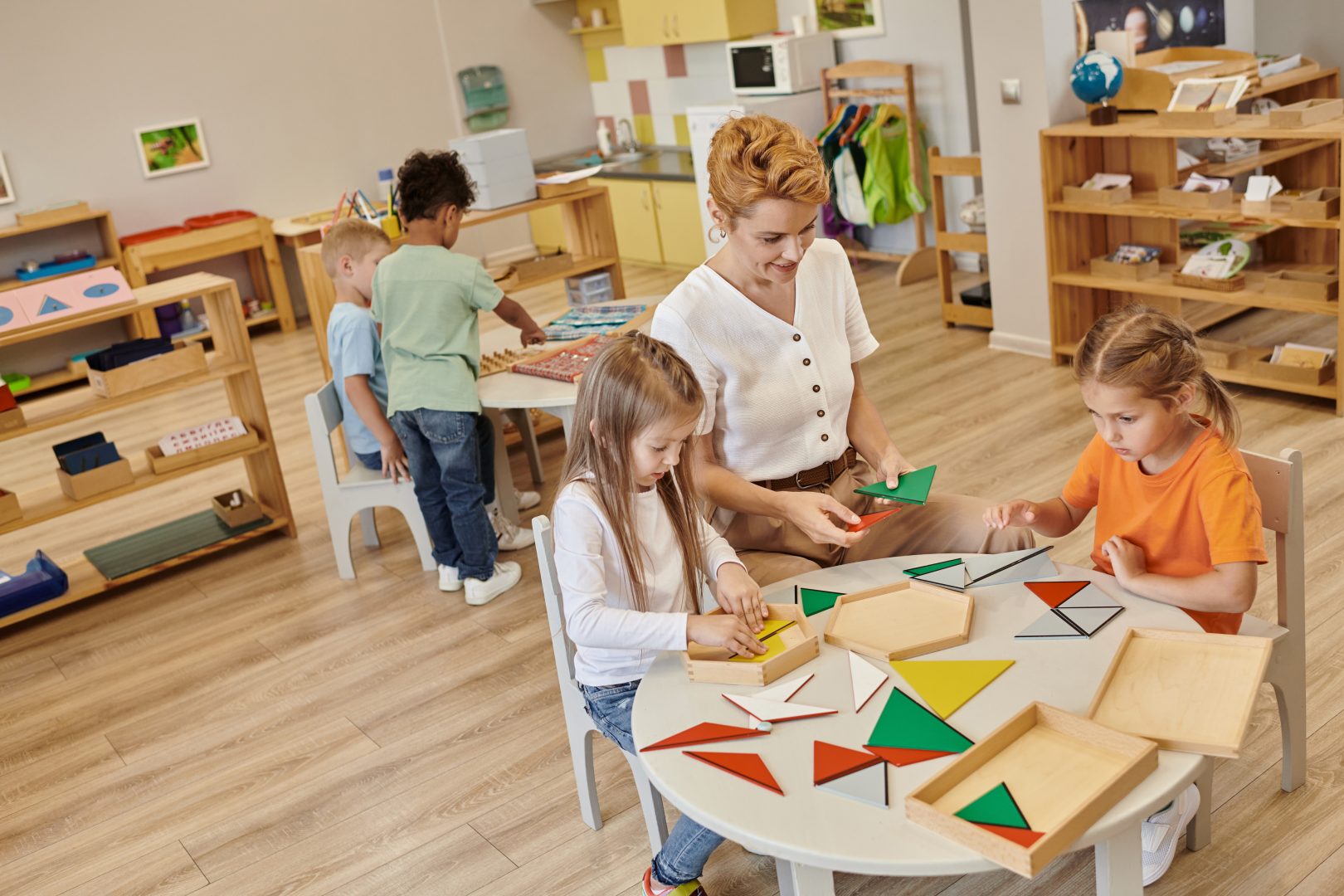

Stepping into a Montessori classroom, the vibrant atmosphere immediately captures our attention. We see open, collaborative workspaces instead of uniform rows of desks. The room feels warm, much like a beautifully curated learning studio. Every element in the space serves to nurture a child’s multidimensional growth.
Independence Through Spatial Design
The spatial design tailors every corner of the classroom to the proportions of young learners. Educators arrange low wooden shelving and open book displays so children can retrieve their own learning materials. This layout cultivates a profound sense of independence and empowers students to make their own decisions.
Interestingly, research from the University of Virginia highlights a powerful benefit. Students in these autonomous environments develop significantly more mature executive brain functions as they reach adulthood.
Aesthetic Learning Materials Rooted in Science
The learning apparatus features natural materials that engage the senses and ignite curiosity. Children trace sandpaper letters to internalize alphabet shapes long before holding a pencil. They also work with sound cylinders to refine their auditory acuity.
Additionally, students explore the beautifully crafted binomial cube. This tool helps them visualize algebraic formulas as precise, three-dimensional blocks they build with their own hands. These tactile experiences transform abstract concepts into concrete lessons that anchor deeply in long-term memory.
The Educator’s Role in Self-Directed Exploration
Within this environment, educators move fluidly around the room. They closely observe the self-directed discovery unfolding for each child. Rather than lecturing from the front, teachers offer gentle, personalized guidance when needed.
They view mistakes as a natural and essential part of the learning process. This safe space to falter and try again shapes resilient thinkers who are eager to experiment.
Peace Within Purposeful Activity
The classroom atmosphere remains serene, yet full of dynamic, purposeful activity. We might see a child unrolling a work rug to assemble a puzzle map of the continents. Nearby, a small group collaborates on an amphibian life cycle in the biology corner.
This freedom to choose meaningful work nurtures an exceptionally sustained attention span. Leading academic journals report a clear trend. Montessori students consistently show higher levels of deep focus and positive social engagement compared to those in conventional settings.
Ultimately, a profound philosophy grounds the uniqueness of the Montessori classroom. The learning environment must work in harmony with the natural development of the human brain. The true beauty of this space lies in how we honor each student as a whole individual. This environment equips every child to discover the wonders of the world through joyful, self-guided exploration.
Posted on 3 August 2026